Your hair does not exactly clock out when you do. While you are sleeping, all that tossing and turning can create friction against your pillowcase, leaving hair more tangled, frizzy, flattened, or prone to breakage by morning. A bonnet can help, but whether you actually need one depends on your hair type, texture, and what you want your hair to look like when you wake up.
For some people, a bonnet is a curl-preserving essential. For others, a silk or satin pillowcase may be all the protection they need. The goal is not to create a complicated nighttime routine. It is simply to give your hair a smoother surface to sleep on.
What Does a Bonnet Actually Do?
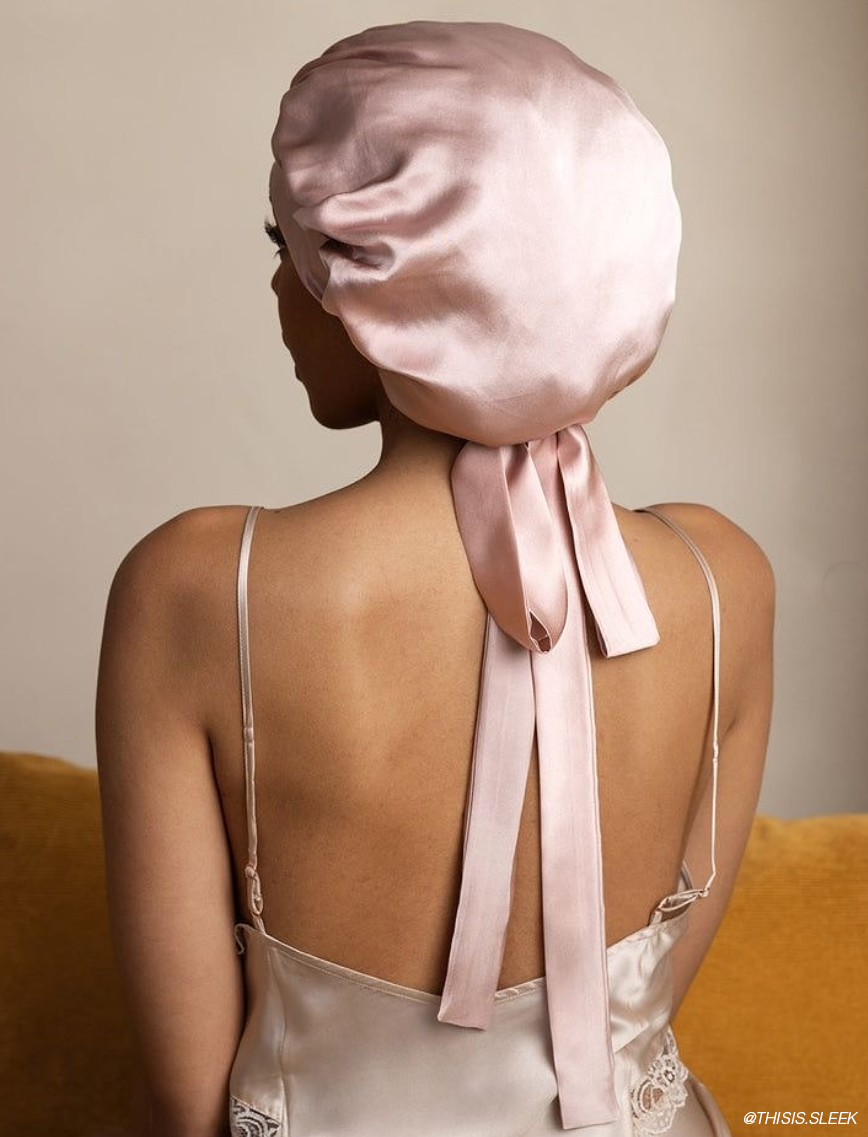
A bonnet creates a barrier between your hair and your pillow, reducing the amount of friction your strands experience overnight. Most are made from silk or satin, which have smoother surfaces than traditional cotton pillowcases.
That matters because friction can rough up the hair cuticle and contribute to tangling and frizz. A bonnet can also help keep curls, coils, and waves from being crushed while you sleep, which means less reshaping and restyling the next morning.
It can be particularly useful if you have dry, textured, curly, or chemically treated hair that is more susceptible to breakage. But you do not have to have a specific hair type to benefit from one. Anyone who wakes up with a head full of tangles may notice a difference.
Who Should Consider Sleeping in One?
Curly and coily hair tends to get the most obvious benefits. A bonnet can help preserve the shape of curls overnight while keeping individual strands from rubbing against the pillow. Instead of waking up and immediately reaching for water, a spray bottle, or a curling iron, you may be able to refresh your style with considerably less effort.
Long hair can benefit, too, especially if it tends to become tangled while you sleep. The same goes for hair that has been bleached, colored, or otherwise processed. When strands are already more vulnerable to dryness and breakage, reducing unnecessary friction is a pretty easy win.
Straight or fine hair is a little different. A bonnet can still protect the hair, but some people may find that it flattens their style or creates unwanted volume at the roots. If that sounds familiar, a silk pillowcase might be the better option.
Silk or Satin?
The words are often used interchangeably when it comes to hair accessories, but they are not technically the same thing. Silk is a natural fiber, while satin describes a type of weave that can be made from several different materials.
Both can create a smooth surface for your hair. If you are shopping for a bonnet, focus less on the label and more on how smooth the material feels, whether the bonnet stays comfortably in place, and whether it is roomy enough to accommodate your hair without compressing it.
A bonnet that is too tight defeats the purpose. You want your hair contained, not squeezed.
How to Wear a Bonnet Without Flattening Your Hair
The way you put your hair into a bonnet can make almost as much difference as the bonnet itself. Rather than stuffing everything inside in one direction, loosely gather curls or waves toward the top of your head. This keeps them from being pressed flat underneath you.
For longer hair, loosely piling it into a pineapple can help preserve volume and shape. If your hair is straight, you may prefer to leave it loose or wrap it gently before putting on the bonnet.
Whatever your texture, avoid going to bed with soaking-wet hair. Wet strands are more fragile, and trapping damp hair against your scalp and inside a bonnet for hours is unlikely to make for the prettiest morning-after situation.
What to Do If You Dislike Bonnets
Not everyone wants to sleep in one, and honestly, you do not have to. A silk or satin pillowcase is the obvious alternative and can offer many of the same friction-reducing benefits without adding another accessory to your bedtime routine.
It is also worth considering your hairstyle. A loose braid can help prevent tangling in long hair, while a loose pineapple or high bun can help protect curls. The key is keeping everything gentle. Tight elastics and overly secure hairstyles can create their own problems by putting tension on the hair while you sleep.
You can also make your nighttime routine more about preparation than protection. A small amount of lightweight hair oil on the ends can help soften dry strands, while a leave-in conditioner can give curls and waves a little extra moisture before they go under a bonnet.
The Bottom Line
Sleeping in a bonnet is not a requirement for healthy hair, but it can be a useful way to reduce friction, preserve texture, and make your morning routine easier. If you have curls, coils, dry or processed hair, it may be particularly worth trying.
And if the idea of wearing a bonnet to bed is simply not for you, a smooth pillowcase, a loose protective style, and a little thoughtful nighttime prep can still go a long way. Good hair days, as it turns out, can start before you even fall asleep.