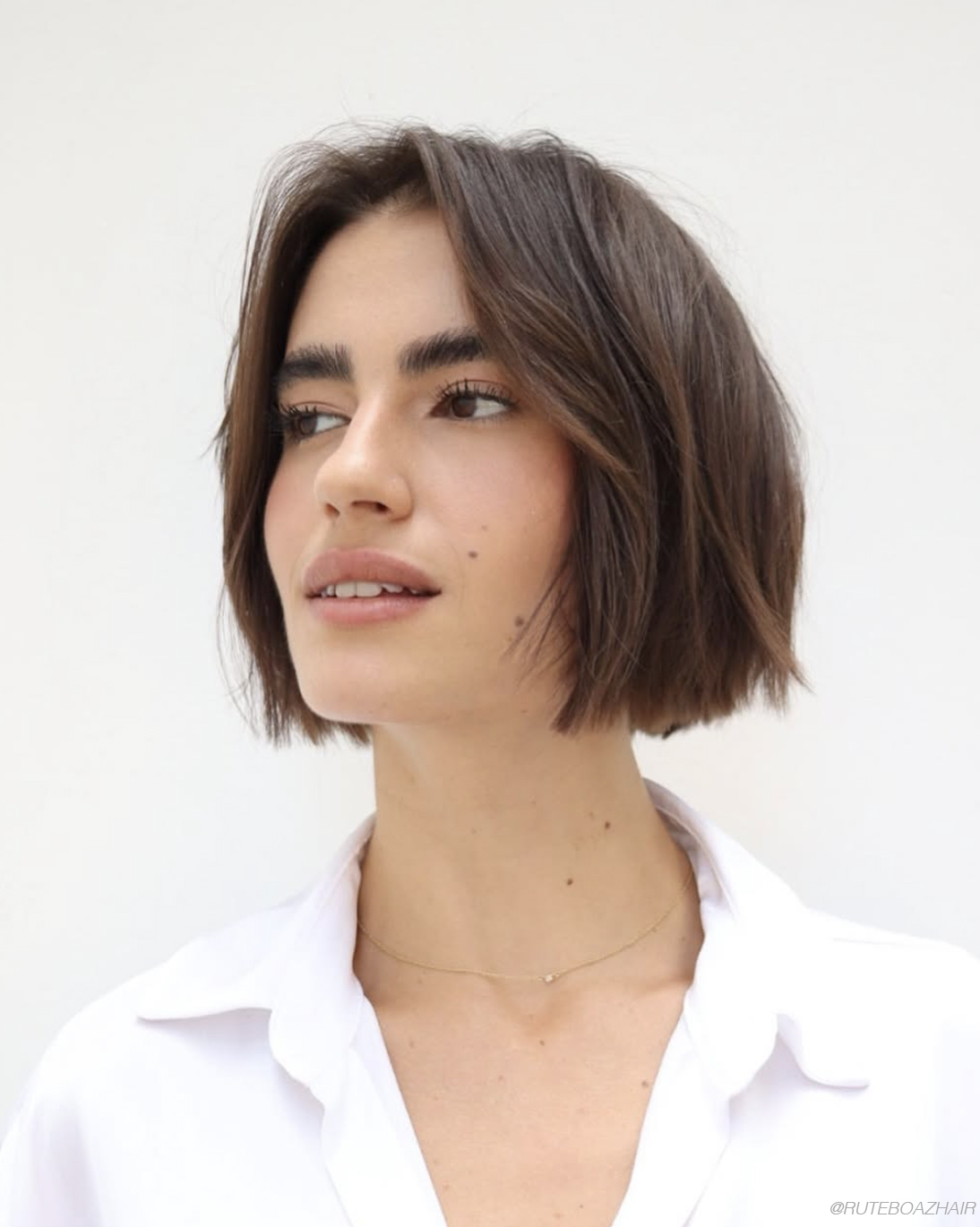
A modern classic with a sharper point of view. That’s the case with the blunt bob in 2026. Stripped back, refined, and modern, this version isn’t about nostalgia or throwbacks—it’s deliberate from every angle. After years of diffused shapes and overworked texture, the blunt bob feels like a palate cleanser. It’s direct. It’s clean. And it makes an immediate impact. So, is this cut right for you? Let's discuss!
What Makes a Bob “Blunt”
A blunt bob is defined less by length and more by its finish. The ends are cut evenly, creating a strong horizontal line that gives the haircut its signature look. There’s no tapering, stacking, or feathering at the bottom—just a precise edge that anchors the entire shape.
This structure creates visual weight at the ends, which is why the blunt bob is often associated with thicker-looking, healthier hair. The lack of layers allows the cut to read bold yet minimal, making it one of the most graphic silhouettes in hair right now.
Why It Feels So On Point
The popularity of the blunt bob reflects a broader shift toward intentional beauty. People are gravitating toward haircuts that feel polished without being high-maintenance, and shapes that look just as good on day three as they do fresh from the salon.
The blunt bob eliminates uneven or fragile ends in one decisive move and replaces them with a shape that holds. There’s a sense of confidence built into the cut that makes a statement.
How to Get the Cut Right
Achieving a great blunt bob comes down to precision and customization. When asking for the cut, the focus should be on a clean, even perimeter that works with your natural growth patterns rather than against them. Hair should be allowed to fall naturally while being shaped, ensuring the line stays balanced once styled at home.
Because the cut relies so heavily on its outline, upkeep is part of the equation. As the hair grows, the edge softens quickly, so regular trims are essential to preserve that sharp, modern look. This is not a “set it and forget it” haircut—but the payoff is worth it.
Who the Blunt Bob Works For
The beauty of the blunt bob lies in its adaptability. Straight and softly wavy textures highlight the cut’s crisp finish most clearly, but that doesn’t mean other hair types are excluded. Fine hair often benefits from the added density the blunt edge provides, while thicker hair can wear the cut with subtle internal adjustments to keep the shape balanced.
The success of the haircut isn’t about texture alone—it’s about how thoughtfully the shape is tailored to the individual. When weight, density, and length are considered together, the blunt bob can feel surprisingly effortless.
Choosing Your Length
While the term “bob” suggests something short, a blunt bob can live anywhere from just below the jaw to brushing the collarbone. Mid-length versions dominate right now, offering a strong outline with enough flexibility to style in multiple ways. Shorter cuts create a bolder, more graphic effect, drawing attention to the jaw and neckline. Slightly longer versions soften the look while maintaining the integrity of the blunt edge. The best length is one that complements your proportions and suits how you realistically wear your hair day to day.
Styling Without Overthinking It
One of the quiet luxuries of a blunt bob is how little it demands. A simple blow-dry enhances the shape, while smoothing products or a touch of heat can refine the finish. Because the cut is so intentional, even air-dried versions retain a sense of polish.
Whether worn sleek and glossy or with subtle movement, the blunt bob always reads purposeful. That’s what sets it apart from trend-driven cuts—it doesn’t need embellishment to feel complete.
Cover Image Credit: @ruteboazhair