So, you got a haircut. Maybe it was supposed to be a trim and somehow became a chop. Maybe the bangs looked better in the reference photo. Or maybe you simply left the salon wondering why your hair suddenly feels about three inches shorter than you imagined.
First, take a breath. Hair grows.
Unfortunately, there is no overnight fix for a haircut gone wrong. Hair typically grows around half an inch per month, so the real strategy is less about making it grow dramatically faster and more about keeping every bit of new growth healthy enough to retain.
That means protecting your ends, taking care of your scalp, and resisting the temptation to keep cutting your way out of the problem.
Can You Actually Make Hair Grow Faster?
Not by much.
Your rate of hair growth is largely determined by factors you cannot completely control, including genetics and age. Products promising dramatically faster growth should therefore be approached with a healthy dose of skepticism.
What you can influence is how much length you retain. If your ends are constantly splitting and breaking, your hair may be growing from the root while appearing to stay the same length.
Think of it as a race between growth and breakage. Your goal is to make sure growth wins.
Start With Your Scalp
Healthy-looking lengths start at the root, so your scalp deserves attention while you are waiting for your haircut to grow out.
Keep your scalp clean and avoid letting heavy styling products build up around the roots. If you use a lot of dry shampoo, hairspray, or texturizing products, occasionally incorporating a clarifying shampoo can help remove buildup.
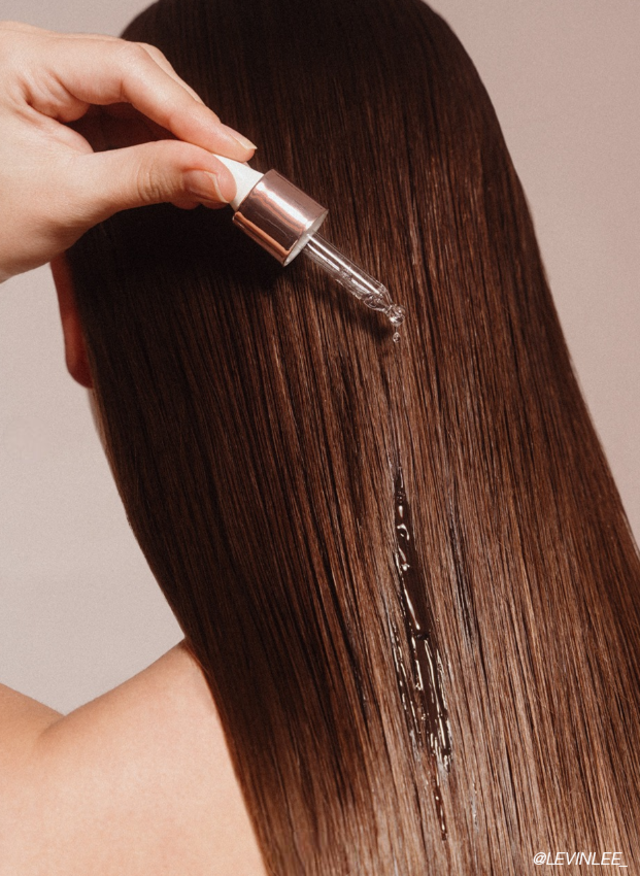
A scalp serum can also be a nice addition to your routine if you enjoy the ritual. The Ordinary Multi-Peptide Serum for Hair Density is a lightweight option designed to be applied directly to the scalp and works easily alongside an existing hair routine.
The Ordinary Multi-Peptide Serum for Hair Density


Just remember that a scalp serum is not a magic growth button. Think of it as supporting a healthy scalp environment rather than forcing your follicles to suddenly work overtime.
Treat Your Ends Like They're Precious
Once your hair starts growing, protecting the ends becomes the main event.
Your ends are the oldest part of your hair, which means they have had the longest exposure to brushing, heat, coloring, sunlight, and general life. They are also the part most likely to split and break.
Condition every time you shampoo and use a hair mask regularly if your lengths feel dry or damaged. A leave-in conditioner can provide another layer of protection, especially if you heat style frequently.
For a lightweight option, K18 Leave-In Molecular Repair Hair Mask is designed for damaged hair and can be particularly useful if your bad haircut happened alongside a lot of bleaching or heat styling. Use it as directed rather than treating it like a traditional rinse-out conditioner.
K18 Leave-In Molecular Repair Hair Mask

The goal is simple: keep the hair you already have on your head while you wait for more of it to grow.
Put Down the Hot Tools, Just a Little
You do not have to give up your blow dryer forever. But if you are desperate to grow out a haircut, now is a good time to reconsider how often you are reaching for your hottest settings.
Repeated high heat can contribute to damage and breakage, making it harder to retain length. When you do style, use heat protectant and turn down the temperature when possible.
Air-drying more often, trying heatless styles, or simply giving your hair a few no-heat days each week can help reduce the amount of mechanical and thermal stress your ends experience.
Be Careful With Brushing
It is easy to blame heat styling for every broken strand, but everyday handling matters, too.
Aggressive brushing, especially when hair is wet, can put unnecessary stress on fragile strands. Start detangling from the ends and work your way upward, using a wide-tooth comb or a gentle detangling brush.
And skip the 100-stroke rule. Your hair does not need an elaborate brushing ritual to grow.
Don't Stop Getting Trims Entirely
This may sound counterintuitive when the entire goal is to get your length back, but avoiding the salon forever is not necessarily the answer.
If your ends are splitting, leaving them untouched can allow the damage to travel farther up the strand. A small trim when necessary can help keep your ends looking healthier while you grow out the rest.
The key is communication. Tell your stylist that length retention is the priority and ask for the smallest trim possible. You are looking for maintenance, not another transformation.
Make Your Haircut Work While It Grows
The awkward stage is often the hardest part, so styling can be your secret weapon.
If a short cut is growing out unevenly, experiment with texture rather than trying to force every strand into place. Soft waves can make different lengths look intentional, while accessories can help disguise bangs or layers that are currently in an in-between phase.
For shorter bangs, try a side part, a soft curtain shape, or styling them back with a little texture. For uneven layers, embrace movement instead of repeatedly trimming them to match.
Sometimes the fastest way to grow out a haircut is simply to stop staring at it every morning.
Take Care of Your Overall Hair Health
There is no miracle food or supplement that can suddenly make your hair grow inches overnight. But consistently eating a balanced diet and getting enough protein and key nutrients supports normal hair growth.
If you notice significant or sudden changes in your hair growth, shedding, or density, that is different from simply waiting for a haircut to grow out. In that case, it is worth speaking with a healthcare professional rather than trying to solve the issue with increasingly complicated hair products.
How Long Will It Take?
Unfortunately, patience is still part of the process.
At an average growth rate of around half an inch per month, you could see roughly three inches of growth over six months. Individual growth rates vary, though, and breakage can make the process appear slower.
The best approach is to focus on milestones rather than checking your hair every few days. Take a photo now, then compare it after a month or two. You may be surprised by how much progress becomes visible once you stop measuring it daily.
The Bottom Line
You cannot force a bad haircut to disappear overnight, but you can make the growing-out process much easier.
Focus on your scalp, protect your ends, limit unnecessary heat and breakage, and get tiny maintenance trims when you actually need them. Most importantly, resist the urge to make another dramatic haircut decision while you are still emotionally processing the first one.
Your hair will grow back. In the meantime, consider this your excuse to become very good at hair accessories.
Some of the products featured here may contain affiliate links, meaning we may earn a small commission at no extra cost to you. All recommendations are based on personal use, stylist feedback, or product performance.