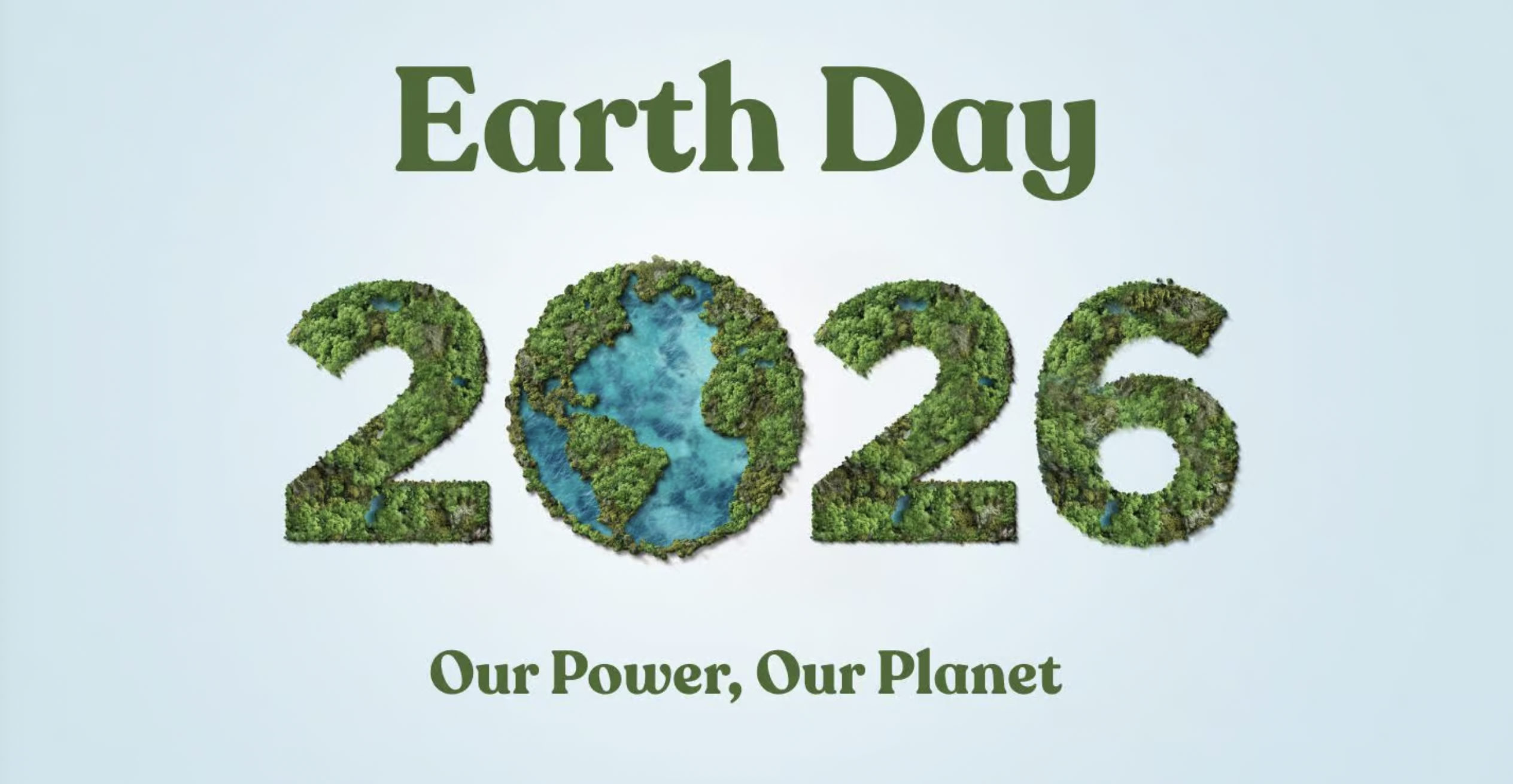
Every April, Earth Day arrives not with urgency, but with clarity, a quiet recalibration that asks you to look a little closer at the habits that usually run on autopilot. This year’s theme, Our Power, Our Planet, is less about sweeping declarations and more about something steadier: the recognition that environmental stewardship has never belonged to a single administration, institution, or moment in time.
It lives in the everyday.
In communities, in households, in routines that feel small but add up to something far more durable. Progress, as it turns out, is already in motion, happening through local action, practical choices, and a shared understanding that caring for the planet is both a responsibility and an investment in how we live now, not just later.
In beauty, where excess is often reframed as excitement and newness is constant, that awareness feels especially relevant.
Because the goal isn’t perfection. It’s participation, thoughtful, consistent, and entirely within your reach.
Earth Day 2026
Start With Less, Not More
The most sustainable beauty routine is rarely the most elaborate one, and yet modern beauty has made abundance feel like the baseline. Ten-step routines, product layering, and shelves that resemble carefully merchandised displays are constantly flaunted on social media, and somewhere along the way, more became synonymous with better. But sustainability begins in the edit, not the addition.
Take stock of what you already own. The half-used serums, the hair masks you forgot you loved, the cleanser you replaced before it was ever truly finished.
Finishing what you start might sound simple, but in an industry built on constant newness, it is quietly subversive. It reduces waste, yes, but it also reshapes your instincts as a consumer. You begin to buy with more care, not just anticipation.
And the payoff is tangible. Skin thrives on consistency. Hair responds to routine. A streamlined lineup often performs better than a crowded one.
Choose Products That Do More
If something is going to take up space in your routine, it should earn it.
Multi-functional products are the quiet power players of sustainable beauty. A moisturizer that primes. A styling cream that hydrates and holds. A tint that works across lips and cheeks. These are small consolidations that add up to less clutter, fewer packages, and less waste.
The same logic extends to tools. Reusable cotton rounds. Washable cleansing cloths. Refillable containers that stretch a product’s lifecycle instead of cutting it short.
None of it requires a dramatic overhaul. But over time, these choices shift your routine from something consumptive to something more considered. Efficiency, in this case, becomes its own form of luxury.
Rethink “New”
Beauty and fashion move quickly, and now faster than ever thanks to social media. Trends emerge, peak, and disappear in the span of a scroll, creating the illusion that staying current requires constant acquisition. But participation does not have to mean overconsumption.
Rethinking “new” is less about opting out and more about opting in selectively. Choose products that align with your actual life, not just a momentary aesthetic, and invest in what you will use repeatedly, not just what briefly satisfies curiosity.
This cycle becomes even more visible in fashion, particularly within fast fashion culture, where affordability and accessibility often mask a more complicated reality. Low price points make constant purchasing feel harmless, even habitual, encouraging a buy-wear-discard rhythm that keeps pace with trends rather than personal need. But the true cost is not reflected on the tag. It shows up in overproduction, textile waste, and manufacturing systems that place heavy strain on the environment and often rely on practices that are far from sustainable.
In chasing what is current, consumption becomes continuous rather than considered. And the ease of replacing clothing as trends shift can quietly reinforce a mindset where longevity is no longer the standard.
Slowing down disrupts that rhythm. It creates space for discernment, for personal taste, and for wardrobes and beauty routines that feel stable rather than reactive.
Pay Attention to Packaging
Sustainability conversations often center on ingredients, but packaging is where much of beauty’s environmental impact lives. The shift here is subtle, but significant.
Refillable systems extend the life of a single container. Recyclable materials matter, but only if they are actually processed correctly. And reuse, often overlooked, is one of the simplest interventions. Glass jars repurposed, travel bottles refilled, packaging given a second life instead of a quick exit.
Because the reality is that the beauty industry produces staggering amounts of waste, including tens of billions of packaging units annually, much of which never gets recycled. Which makes one thing clear: the most sustainable packaging is often the one you already own.
Learn to Spot Greenwashing
Sustainability has become a selling point, which means it has also, inevitably, become a strategy.
Enter greenwashing.
At its core, greenwashing is when a product is marketed as “clean,” “natural,” or “eco-friendly” without meaningful evidence to support those claims. It is less about outright lies and more about suggestion: carefully chosen language, aesthetic packaging, and just enough information to create the impression of responsibility.
In beauty, it is everywhere.
Labels like “green,” “non-toxic,” or “sustainable” often have no standardized definition or regulation, making them easy to use and difficult to verify. A product might highlight one plant-based ingredient while the rest of the formula tells a different story. Packaging might be recyclable in theory, but impossible to process in practice.
Even visual cues—earth tones, botanical imagery, minimalist fonts—can be part of the illusion.
The takeaway is not cynicism. It is discernment.
Look beyond the front label. Does the brand provide transparency about sourcing, production, or packaging? Are there credible third-party certifications, or just self-created seals? Are sustainability claims backed by specifics, or just language?
Because real sustainability tends to be detailed, sometimes even unglamorous. It is found in disclosures, data, and long-term commitments, not just branding.
And as a consumer, your power is not just in what you buy, but in what you question.
Make Sustainability Social
For all the emphasis on personal habits, sustainability was never meant to be a solo endeavor.
This is where Our Power, Our Planet becomes something tangible: the understanding that individual choices gain traction when they are shared, repeated, and reinforced collectively.
It is easy to think of impact as distant. But much of it is local.
It can look like showing up to a neighborhood cleanup, gloves on and coffee in hand, where the results are immediate and visible. It can mean participating in tree plantings that will outlast you, quietly improving air quality and green space in your own community. Even supporting local environmental initiatives shifts sustainability from abstract to actionable.
There is also a civic dimension. Contacting local representatives, staying informed about environmental policies, advocating for better infrastructure. These are not dramatic gestures, but they are effective ones. This is how change actually happens: incrementally, persistently, and close to home.
And then there is the cultural layer.
Sustainability becomes far more sustainable when it is normalized, when it moves through conversations as easily as product recommendations do. Sharing a refillable option. Talking about buying less. Explaining why you are finishing products instead of replacing them.
Not as a performance, but as a perspective.
Because habits are contagious. When one person shifts, it quietly gives others permission to do the same.
The Power Is Already Yours
Our Power, Our Planet is not a directive. It is a reminder.
That the ability to create change is not distant or theoretical. It is already embedded in the decisions people make every day, across communities, industries, and yes, even in something as seemingly simple as a beauty routine.
Not because it needs to carry the weight of the world.
But because it is already part of it.
And the smallest shifts, the ones that feel almost inconsequential, are often the ones that last.