There is a particular intimacy to the way makeup meets the eye. It’s the first place we look, the last place light lingers, the feature most capable of changing an entire face with the smallest adjustment. And yet, for those with hooded eyes, this relationship can feel… complicated.
You follow the tutorial. You buy the palette. You apply the liner exactly as instructed. Then you open your eyes—and somehow, the magic disappears. The crease swallows the color. The eyeliner vanishes into a fold of skin. What looked dramatic five minutes ago now feels oddly restrained, like a secret only you know exists.
This isn’t user error. It’s anatomy. And it deserves better strategies—and better storytelling—than the tired idea that hooded eyes are a “problem” to be fixed.
What Exactly Is a Hooded Eye?
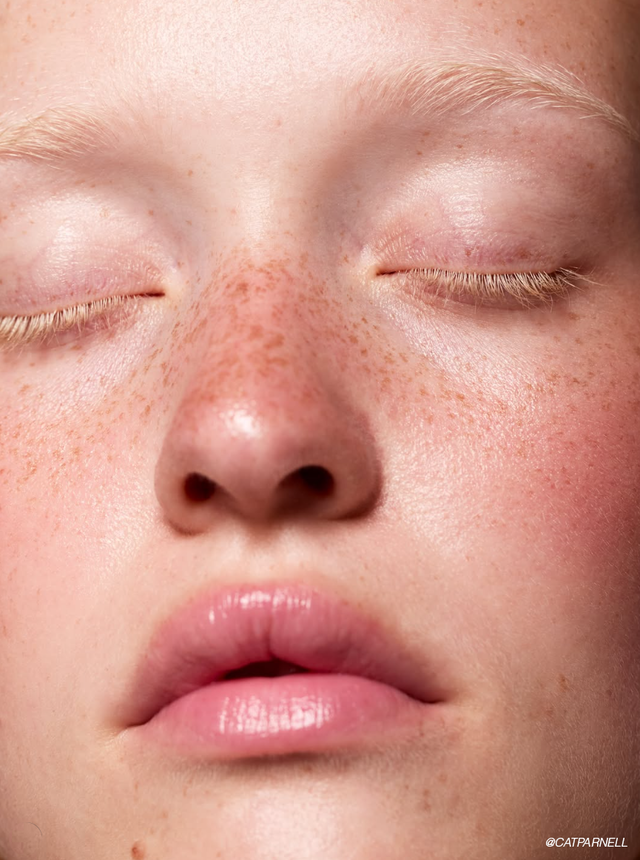
A hooded eye shape is defined by a fold of skin that droops over or rests heavily on the crease, partially obscuring the eyelid when the eyes are open. The mobile lid (the space where eyeshadow traditionally lives) is smaller or less visible. In some cases, it disappears almost entirely when the eye is relaxed.
Hooded eyes exist on a spectrum. Some are subtly hooded, others dramatically so. They can be round, almond, deep-set. They show up across ages and ethnicities. They are not synonymous with “aging,” nor are they rare. In fact, some of the most compelling faces in fashion and film—think of Kate Moss, Jennifer Lawrence, Liu Wen, Eva Green—are defined by hooded lids.
And yet, makeup culture has long centered techniques designed for wide, exposed lid space. Hooded eyes are often treated as an afterthought, or worse, a flaw to camouflage.
Let’s retire that narrative.
The Real Issues (And Why They’re Not Your Fault)
If you have hooded eyes, you’ve likely encountered at least one of the following frustrations:
Disappearing eyeliner. You spend time perfecting a crisp line, only to open your eyes and watch it vanish into the crease.
Transferred shadow. Creams, liners, and even powders migrate upward, leaving smudges where you didn’t intend them.
Lost dimension. Carefully blended eyeshadow looks beautiful when your eyes are closed—and oddly flat when they’re open.
Unbalanced wings. One eye cooperates; the other folds differently, creating asymmetry that no amount of micellar water can emotionally recover from.
These aren’t personal failures. Hooded eyes simply interact with makeup differently. The skin moves more. Gravity plays a bigger role. Traditional “crease” placement doesn’t apply.
Once you stop fighting that reality, everything gets easier.
Rethinking “Correction”
There’s a lot of language in beauty about “correcting” hooded eyes—lifting them, opening them, making them look like something else. While there’s nothing wrong with wanting a lifted or more awake effect, it’s worth questioning the assumption underneath: that hooded eyes need improvement at all.
Instead of correction, think adaptation. Makeup that works with your structure, not against it.
The goal isn’t to erase the hood. It’s to design around it.
Shadow Placement: Above the Crease Is the New Crease
The single most transformative shift for hooded eyes is this: stop placing eyeshadow in the crease you see when your eyes are closed.
That crease disappears when your eyes open. So your definition disappears with it.
Instead, apply transition and contour shades slightly above the natural crease, with your eyes open and your face relaxed. This creates the illusion of depth that remains visible in real life, not just in the mirror moment.
Use soft, matte shades for this step—taupes, muted browns, gentle plums, or warm grays. Matte textures recede visually, which helps sculpt without adding heaviness. Shimmer has its place, but too much in the wrong area can emphasize the fold rather than flatter it.
Blend upward and outward, following the natural direction your eye wants to go. A subtle lift at the outer corner can counterbalance the downward pull of the hood without looking overdone.
Less Lid, More Precision
With limited lid space, every millimeter matters. This is where restraint becomes chic.
Instead of packing multiple shades onto the lid, choose one thoughtfully selected color—a satin taupe, a muted bronze, a soft champagne—and apply it thinly, keeping it close to the lash line. This creates polish without crowding the eye.
If you love shimmer, opt for refined formulas rather than chunky glitter. A delicate sheen catches light when you blink, adding dimension without overwhelming the structure.
And don’t underestimate the power of tightlining—the technique of pressing color into the upper lash line. It adds depth and intensity without stealing space.
Eyeliner: The Make-or-Break Moment
Eyeliner is often the biggest source of frustration for hooded eyes, but it can also be the most transformative tool when done right.
The key is thinness and strategy.
A thick liner across the lid will inevitably disappear when the eyes open. Instead, keep the line as close to the lashes as possible, gradually thickening only at the outer corner. Think taper, not block.
For wings, forget the classic upward flick drawn with eyes closed. Hooded eyes require mapping with eyes open. Look straight ahead, mark where you want the wing to end, and connect it back to the lash line in a way that works with your fold—even if that shape looks unconventional when your eyes are shut. What matters is how it reads when you’re living your life.
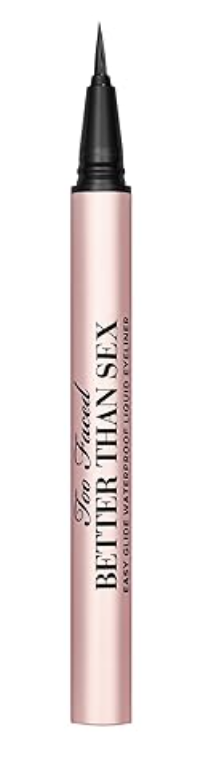
As for product, a smudge-proof formula is non-negotiable. A standout option is the Too Faced Better Than Sex Easy Glide Liquid Eyeliner. The tip is precise enough for ultra-thin lines, the pigment is rich without being heavy, and—most importantly—it holds up against transfer. It respects the architecture of a hooded eye instead of fighting it.
If liquid feels intimidating, a waterproof gel pencil pressed into the lash line and lightly smudged can be equally effective and more forgiving.
Too Faced Better Than Sex Easy Glide Liquid Eyeliner

Mascara and Lashes: Lift Is Everything
With hooded eyes, the difference between a good lash day and a great one often comes down to curl.
Curl your lashes. Then curl them again. Hold the curler at the base for a few seconds longer than you think necessary. This creates vertical lift that opens the eye and prevents lashes from casting shadows onto the lid.
Choose mascaras that emphasize length and lift rather than weighty volume. Formulas that are too thick can drag lashes downward, working against the shape.
False lashes, if you wear them, should be selected carefully. Skip overly dense bands. Instead, opt for styles that are shorter at the inner corner and longer at the outer edge, with a wispy, staggered pattern. This mirrors the natural eye shape and adds lift without closing the eye off.
Brows and Balance
Brows matter more than we admit. For hooded eyes, they create the visual ceiling.
A softly lifted brow with a gentle arch can counterbalance heaviness on the lid, while overly thick or low-sitting brows can compress the space further. This doesn’t mean chasing extreme arches or over-plucking—just maintaining clarity and intention.
Keep the underside of the brow clean. A touch of concealer or subtle highlight beneath the arch can create brightness and separation, giving the eye area room to breathe.
The Attitude Shift
Perhaps the most important tip has nothing to do with product or technique.
Hooded eyes are expressive. They’re cinematic. They lend mystery, softness, and gravity to a face. They photograph beautifully. They age slowly. They hold emotion in a way wide-open eyes often don’t.
Makeup for hooded eyes isn’t about forcing openness or constant lift. It’s about honoring nuance. About understanding that beauty doesn’t need to shout to be seen.
When you stop trying to replicate techniques designed for someone else’s bone structure, you free yourself to create looks that feel intentional, modern, and distinctly yours.
So yes—adapt your eyeliner. Place your shadow higher. Choose formulas that work harder so you don’t have to.
But also: let your eyes be what they are.
There is power in that fold. There is elegance in subtlety. And there is nothing wrong with a look that reveals itself slowly.
Some of the products featured here may contain affiliate links, meaning we may earn a small commission at no extra cost to you. All recommendations are based on personal use, stylist feedback, or product performance.