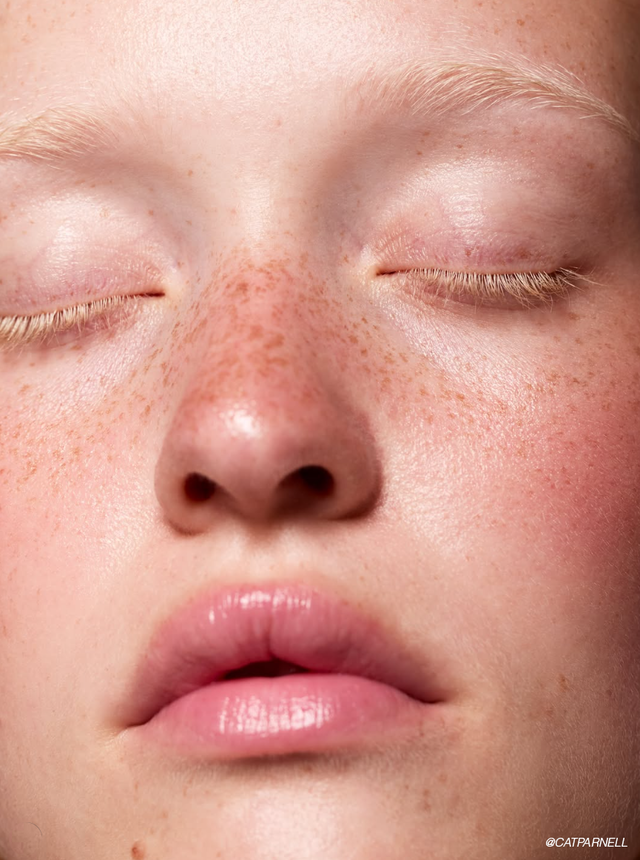
There are skincare ingredients that trend, and then there are ingredients that transform. Tretinoin belongs firmly in the latter category. Long before barrier creams lined bathroom shelves and “skin cycling” became a ritual, dermatologists were quietly prescribing this potent vitamin A derivative to patients who wanted real change. Not surface glow. Not temporary smoothness. Structural, cellular-level renewal.
If modern beauty has a gold standard, tretinoin is it.
The Prescription That Rewrote Skincare
Tretinoin, also known as all-trans retinoic acid, is the prescription-strength form of vitamin A. Unlike over-the-counter retinols that require conversion within the skin, tretinoin works immediately. It binds directly to retinoic acid receptors in skin cells, instructing them to turn over more efficiently and produce more collagen.
First introduced in the 1970s as an acne treatment, it gained recognition under brand names like Retin-A. What began as a solution for breakouts quickly revealed a broader story. Patients using it for acne noticed smoother texture, softened fine lines, and a gradual fading of sun damage. Dermatology had stumbled upon something far more powerful than a spot treatment.
Decades later, it remains the benchmark. Every new retinoid is measured against it. Few compare.
What It Actually Does to Your Skin
At its core, tretinoin accelerates cellular turnover. Dead cells shed more rapidly, preventing the buildup that leads to clogged pores and dullness. Beneath the surface, fibroblasts are stimulated to produce collagen and elastin, restoring firmness and resilience that decline with age and sun exposure.
The results unfold over time. Fine lines soften. Pigmentation becomes less pronounced. Pores appear tighter because they are less congested. Acne diminishes in both frequency and severity. The skin takes on a clarity that feels earned rather than filtered.
Unlike exfoliating acids that work primarily at the surface, tretinoin alters skin behavior. It improves how cells function. That distinction explains its versatility and why dermatologists rely on it for concerns that seem, at first glance, unrelated.
The Adjustment Phase
No one romanticizes the first few weeks. Redness, peeling, dryness, and the infamous purge can all make an appearance. By accelerating turnover, tretinoin brings underlying congestion to the surface more quickly. Breakouts that were already forming declare themselves sooner.
It is not the ingredient failing. It is the skin recalibrating.
Most dermatologists recommend beginning with a low concentration and applying a pea-sized amount to dry skin at night. Frequency often starts at two to three times per week, gradually increasing as tolerance builds. The goal is consistency, not bravado.
Within eight to twelve weeks, irritation typically subsides. By month three, subtle refinement becomes visible. By month six, the shift feels undeniable.
Acne, Aging, and Hyperpigmentation
What makes tretinoin singular is its range. For acne-prone skin, it prevents microcomedones from forming, addressing breakouts at their earliest stage. For those concerned with aging, it is one of the few topical ingredients proven to stimulate new collagen production and reduce fine lines.
Hyperpigmentation responds beautifully as well. By increasing turnover and dispersing excess melanin, tretinoin gradually fades dark spots, including post-inflammatory marks left behind by acne. It is not an overnight eraser. It is a steady corrector.
This is not a product that chases one concern. It recalibrates the ecosystem of your skin.
The Cultural Obsession With Retinoids
In recent years, retinol has become a buzzword. Beauty aisles are saturated with derivatives that promise similar results with less irritation. And for some, these gentler forms are enough. They offer incremental improvement and easier integration into complex routines.
But prescription tretinoin exists in a different category. It does not rely on marketing language or trend cycles. Its reputation is built on longitudinal studies and clinical results.
Who Should Approach With Care
As transformative as tretinoin can be, it is not universally appropriate. Those who are pregnant or attempting to conceive are typically advised to avoid prescription retinoids. Individuals with rosacea or severely compromised barriers may need to stabilize their skin before introducing such a potent active.
A consultation with a board-certified dermatologist ensures proper concentration and guidance. Starting at 0.025 percent before progressing to 0.05 percent or higher is common. More is not better. Tolerance determines trajectory.
Patience becomes part of the ritual.
The Long Game
Perhaps the most compelling truth about tretinoin is that its benefits compound. Continued use over years has been shown to maintain collagen production and slow visible photoaging. It is one of the rare skincare investments that appreciates with time.
Users often notice that makeup begins to sit differently. Foundation looks less necessary. Highlighter feels redundant. The skin reflects light on its own, not in a glassy way, but in a healthy, resilient one.
In a beauty culture captivated by novelty, there is something undeniably chic about committing to an ingredient with history. Tretinoin does not promise perfection. It promises progress. Real, biological, measurable progress.
And that is what makes it transformative.